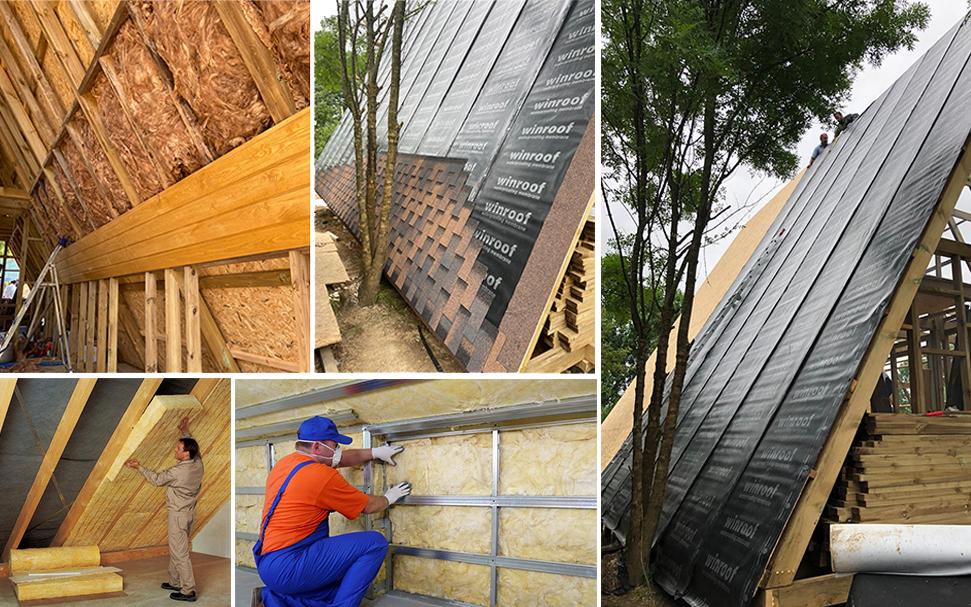
Heat, sound insulation and fire protection in wooden buildings
Wooden structures, which are frequently seen in regions with dense forest areas; Although they are durable structures that are resistant to all weather conditions, it is necessary to make heat and sound insulation and increase their resistance against fire at the same time.
How to make heat and sound insulation in wooden structures?
Although wood is an easy-to-build and aesthetic structure, it is a building material that requires very good technical knowledge. Due to its natural structure, it is insufficient in terms of heat and sound insulation. Although solutions are produced with the developing technology, you may be exposed to a level of noise that will disturb you with incorrect or incomplete workmanship. Especially on the floor covering, the heat-expanding boards can make noise. Outdoor sounds can also be heard inside the building and cause noise pollution. Quality insulation provides an effective acoustic insulation.
Rubber, melamine, polyurethane sponges, rubber panels, acoustic carpets with high sound absorption properties are used for sound insulation. In addition, laminated by laying on the inner parts of the wall; It is used in materials such as glass wool, stone wool and wood wool. Sound insulation can be done during the construction phase as well as afterwards. In wooden buildings, horizontal and vertical surfaces such as floors, ceilings and walls are covered with insulation material suitable for the needs, preventing external sounds and noise from entering the building. Thick sponges with barriers or acoustic sponges with high sound absorption capacity in the form of eggs, labyrinths, and pyramids can be used for insulation in wooden structures, which are more permeable than concrete structures.
You can get professional support from us for sound insulation.
You can minimize the sound insulation with the right decoration techniques you will do indoors. You can read our blog post for decoration suggestions in sound insulation.
https://www.baneva.com.tr/blog-ic-mekan-dekorasyonlari-ile-son-dokunuslar-8
imageFire Protection Process of Wooden Structures
Wood is a building material that is both easily flammable and also provides protection against fire. During fire, wood carbonizes evenly and at a rate of 1mm per minute, so load resistance and slump resistance can be accurately predicted during fire. This property of wood also aids in recovery work. Relatively 30, 60, 90 and 120 minutes fire resistance times can be achieved in wooden structures. The fire resistance time is achieved by structural protective cladding, which is generally slab, as well as adding additional dimension to wooden structures taking into account carbonization.
During the fire, the moisture absorbed by the gypsum board evaporates to keep the temperature of the board low on the opposite side of the fire, and ignition of the wood is prevented. In addition, to prevent fire or slow down its speed; The gaps in the structure can be filled with protective and insulating materials that slow down its carbonization. It is one of the fire-preventing materials in non-flammable polyurethane sponges, which is not affected by temperature changes.
To neutralize the fire in a short time; You can use the automatic fire extinguishing system using a sprinkler. This system, which is most preferred in wooden structures, sprays pressurized water mist instead of direct water. The system wets the wood material, unlike water, it has a three-dimensional effect, which suppresses the fire in the most effective way. One of the good features of the spray system is that it can reach areas where water cannot reach, such as under tabletops.
Moisture and Vapor Insulation
Wood construction applications are widely preferred due to their versatility, simplicity and lightness. Waterproofing mats work to make wooden structures even better by improving their longevity and interior comfort. Breathable waterproofing blankets and airtight waterproofing membranes protect the wood against the risk of internal and external fire.
Effective Protection from the Outside
For effective protection from the outside, it is recommended to use a vapor permeable waterproofing cover to protect the wooden parts. While waterproofing covers prevent the wood material from being damaged by rain during the construction phase, before the outer cladding is completed, heat
Effective Insider Protection
For energy savings and comfort, it is important to use an air and vapor control layer that improves airtightness and reduces condensation. The vapor control layer is designed to eliminate uncontrolled air leakage by reducing convective heat loss and providing the vapor control system.
Uncontrolled air leakage occurs along fine-line cracks in plasterboard linings and in spaces between and around insulation. When installed in such a way that all flops and inlets are permanently sealed, vapor control layer waterproofing blankets provide a permanent solution to this problem in all building types.
WATER ISOLATION
One of the most important factors that harms our constructions is water. Our structures; It is exposed to external water such as rain, snow, soil moisture, groundwater on the ground where the building is built, and internal water used in the bathroom and toilet. The processes carried out to protect our structure and comfort from water and moisture that threaten our comfort are called waterproofing.
Water isolation; It is made to protect the building elements above the ground level from the damages of precipitation waters, and the construction elements below the ground level from the harmful effects of ground water and soil moisture. For an effective waterproofing, the application must cover all the building elements from the foundation to the roof of the building in an integrated manner. Some application areas where waterproofing materials are used are as follows;
* Foundations, walls in contact with the soil,
* The level at which water can accumulate outside the structure or splash
exterior walls and facades underneath,
* Terrace and pitched roofs
* Balconies
* Wet areas such as bathrooms and WCs,
Application
In waterproofing, the application takes place in 2 ways. While waterproofing materials prevent water from entering the building, drainage systems ensure that the collected water is removed from the building by means of routing elements.
Drainage application
It is made to protect the building from underground, surface and leachate waters and waters formed by melting snow and ice. Drainage is applied in two ways, external and internal: While external drainage is applied outside the building, internal drainage is the type of drainage applied by opening a well in the basement of the buildings.
Waterproofing in Foundations
The foundation systems of the buildings are generally projected as individual, continuous, piled or pileless raft general. Whichever system is chosen, the foundations of the structures must be strong enough to carry the building above them throughout its life. However, the fact that the foundation is made of sufficient strength alone is not sufficient for longevity. It is also necessary for the foundations to be insulated against water and the corrosive effects of water. Waterproofing in foundations is divided into three as waterproofing against ground moisture, against unpressurized water and against pressurized water. Polymer bitumen covers, plastic/rubber-based synthetic covers or spreading-based waterproofing materials can be used in waterproofing applications on foundations.
Waterproofing on Roofs
Rain, snow, hail, temperature, wind loads, etc. Roofs, which are under many physical external influences, are also exposed to the passage of water vapor from the indoor environment to the atmosphere. For longer-lasting structures, the ingress of water should be prevented or its exit in the form of water vapor should be facilitated. In this context, heat and water insulation should be designed together in roof insulation.
Pitched Roofs: These are the insulation applications made to prevent water from leaking into the building in case of heavy rain, stormy, rainy weather and snow accumulation on tile-covered sloped roofs.
In roof covers; Tile cover, asbestos cement cover, metal cover, plastic cover, shingle cover and other (wood, reed, etc.) cover types are applied. The most widely used of these is the shingle cover.
Insulation of wet areas such as bathrooms, kitchens and toilets during the construction phase: Wet areas are usually covered with ceramics. However, although ceramics are waterproof, they do not provide waterproofing by themselves.
Post-construction insulation of wet areas such as bathrooms, kitchens and toilets: It should be added to the mortar water while making the joint paste to ensure the waterproofing of the ceramic joints. In the event that water or moisture passes to the lower floors after ceramic coating of wet areas that have been covered without insulation or whose insulation has been damaged for various reasons, insulation can be made by using adherence enhancing and waterproofing materials added to cement mortars. For this, first of all, the joint fillings between the coatings should be cleaned. Opened joints should be filled again with joint filler that has been thickened with water with an appropriate amount of insulation material added. After the joint filler dries, it is applied to the joints from waterproofing materials that provide water repellency and provide an invisible insulation layer to the capillary channels against water. The liquid overflowing on the coating should be wiped with a damp cloth before it dries.
You can contact us for all your questions and comments.
BANEVA WOODEN BUILDINGS
A Wood Adventure